Adega Alentejana
Maintenance and evolution of a legacy VTEX store for imported wines and olive oils — institutional pages, interactive country/region maps, and each wine's technical data sheet.
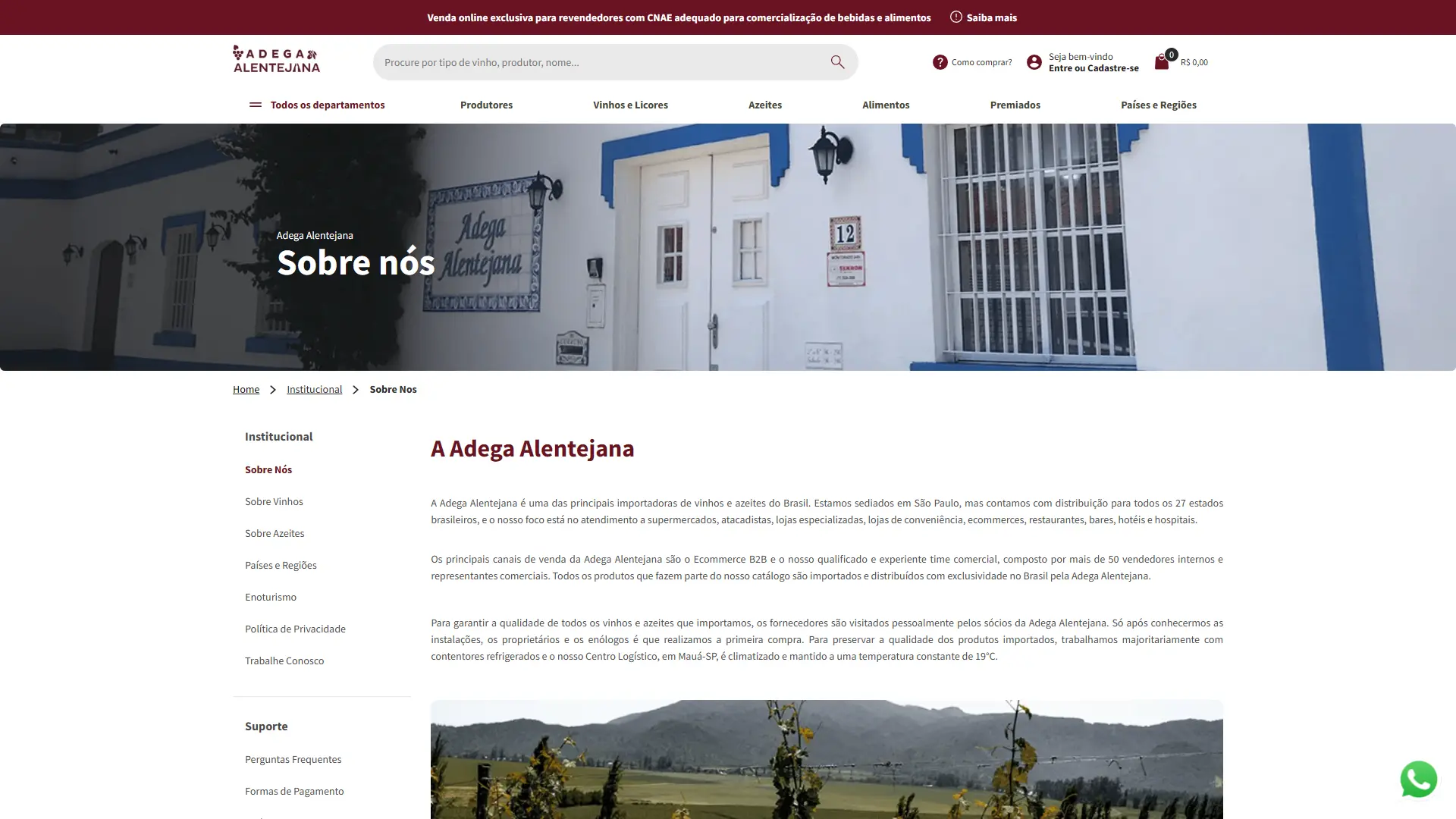
At Avanti I worked on several VTEX stores — most of them I don't even remember the name of anymore. But Adega Alentejana was the one I put the most work into. The entire institutional section was mine, the Countries and Regions page was mine, the product page's technical sheet redesign was mine. Looking back at this site today brings back good memories from a time that won't come back.
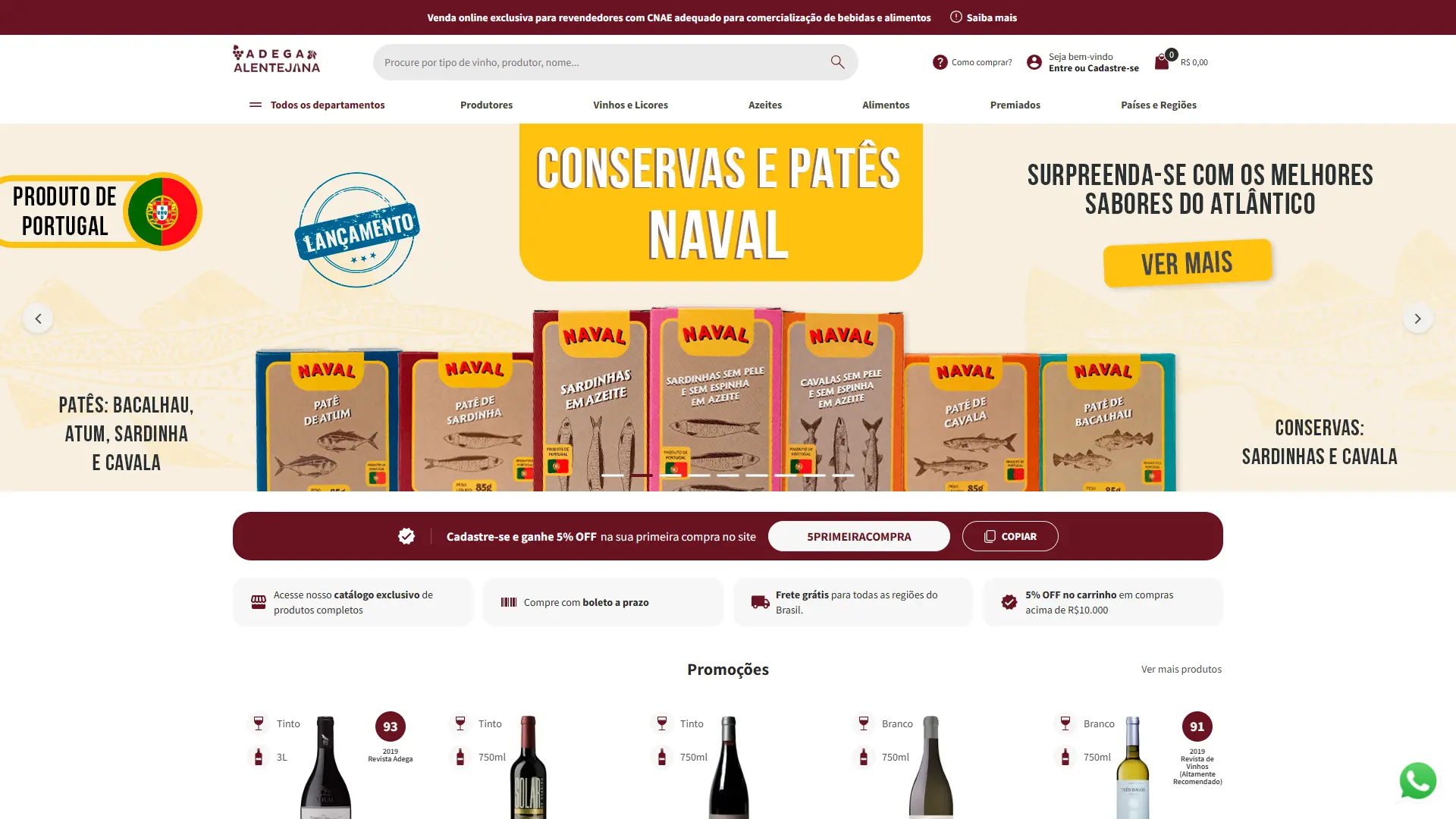
A cellar with roots in 1998
Adega Alentejana was born on May 8th, 1998, the day its first container of wine arrived in Brazil — at first, only wines from Alentejo, the region where one of the founding partners was born. Over time, the catalog grew to wines from other regions of Portugal, then to extra-virgin olive oils, and today includes products from eight countries (Argentina, Chile, Spain, France, Hungary, Italy, Malaysia, and Portugal). Headquartered in São Paulo, it distributes to all 27 Brazilian states and donates 10% of its profits to social institutions. Today the site is an exclusive B2B platform for resellers — but when I worked on it, it was also open to end consumers.
Legacy VTEX, many years, many hands
This store — like practically every legacy VTEX store that's passed through several developers' hands over many years — landed on my desk full of technical debt: timeouts, performance issues, old-school AJAX everywhere, and at least one serious security bug — pricing that should only show to logged-in accounts sometimes leaked to public visitors. It was a huge lesson in keeping a legacy store alive: no React, just jQuery and VTEX's own Dust.js templates rendering everything server-side, so every fix meant first understanding what whoever came before had done — and there was almost never a single consistent pattern across the site.
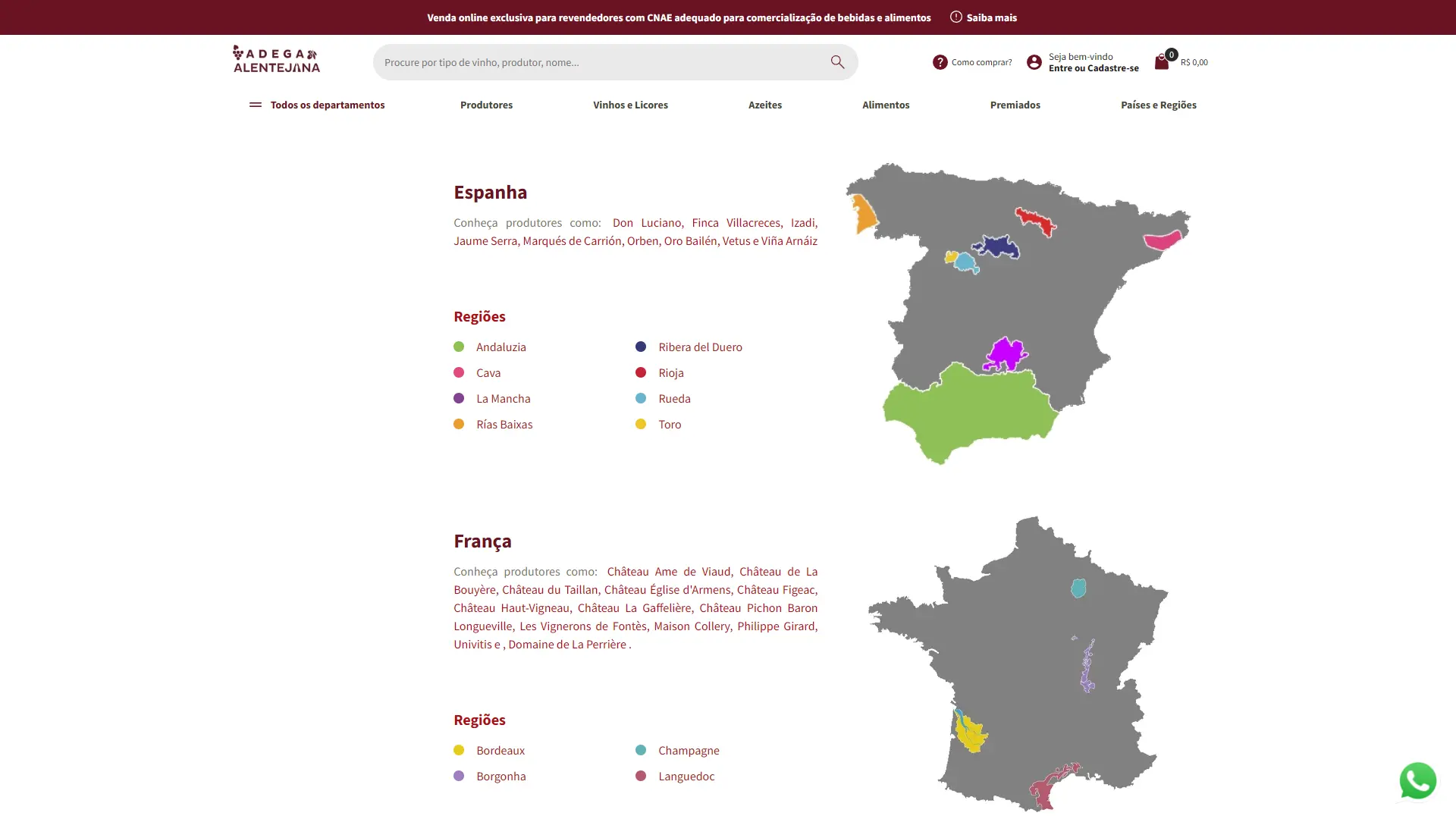
Countries and Regions: a map per country
This is the feature I'm proudest of building. Every country in the catalog (Argentina, Chile, Spain, Portugal...) got an interactive map with its wine regions highlighted by color, each one linking to the producers from that region. I stayed up late working on it and on a companion page with each wine's technical data — I learned a lot of JavaScript putting that together.
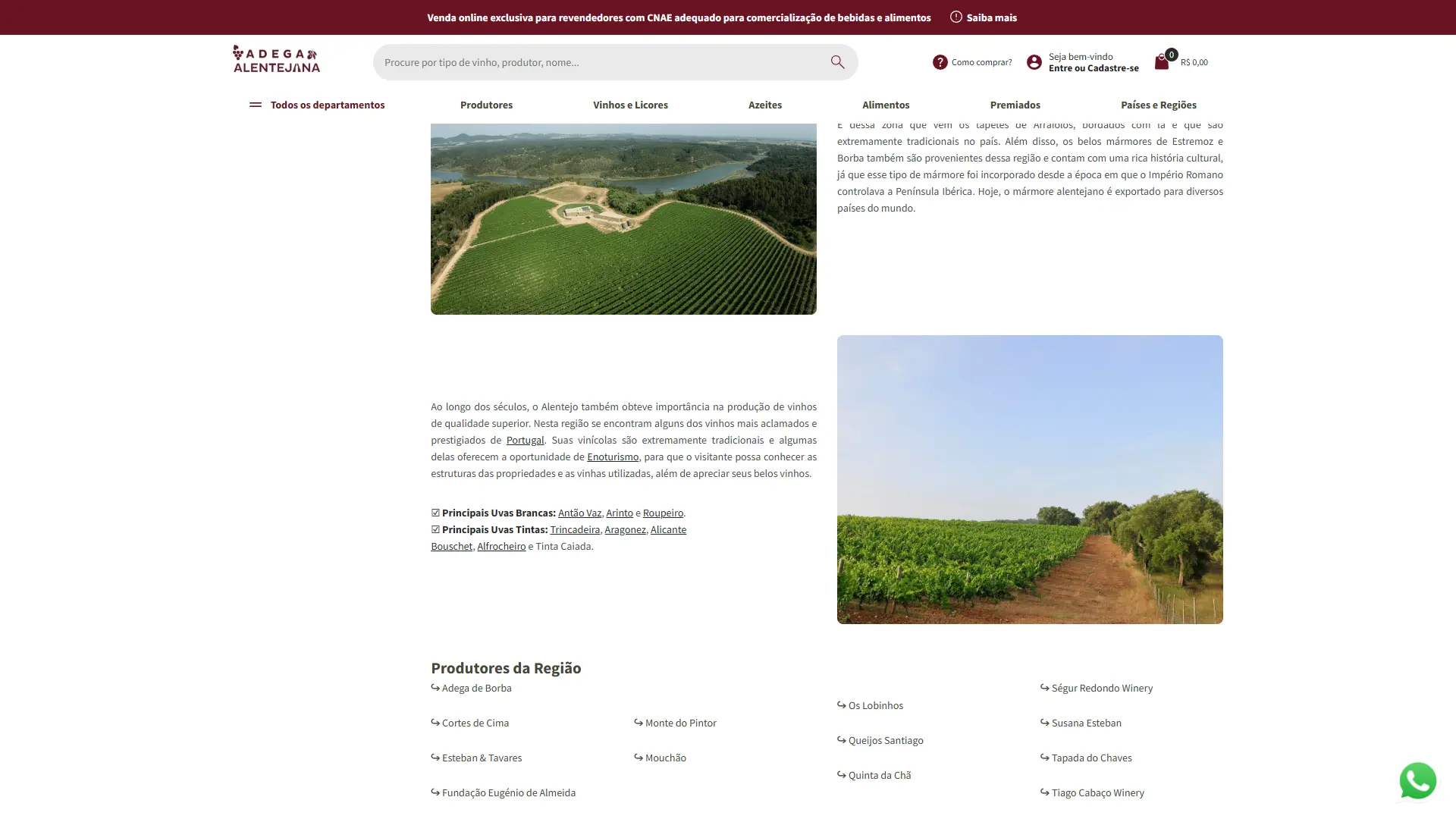
Every region has its own page, with editorial text and real photos of the terroir — the Alentejo one covers Évora, the climate, the typical grape varieties, the region's marble.
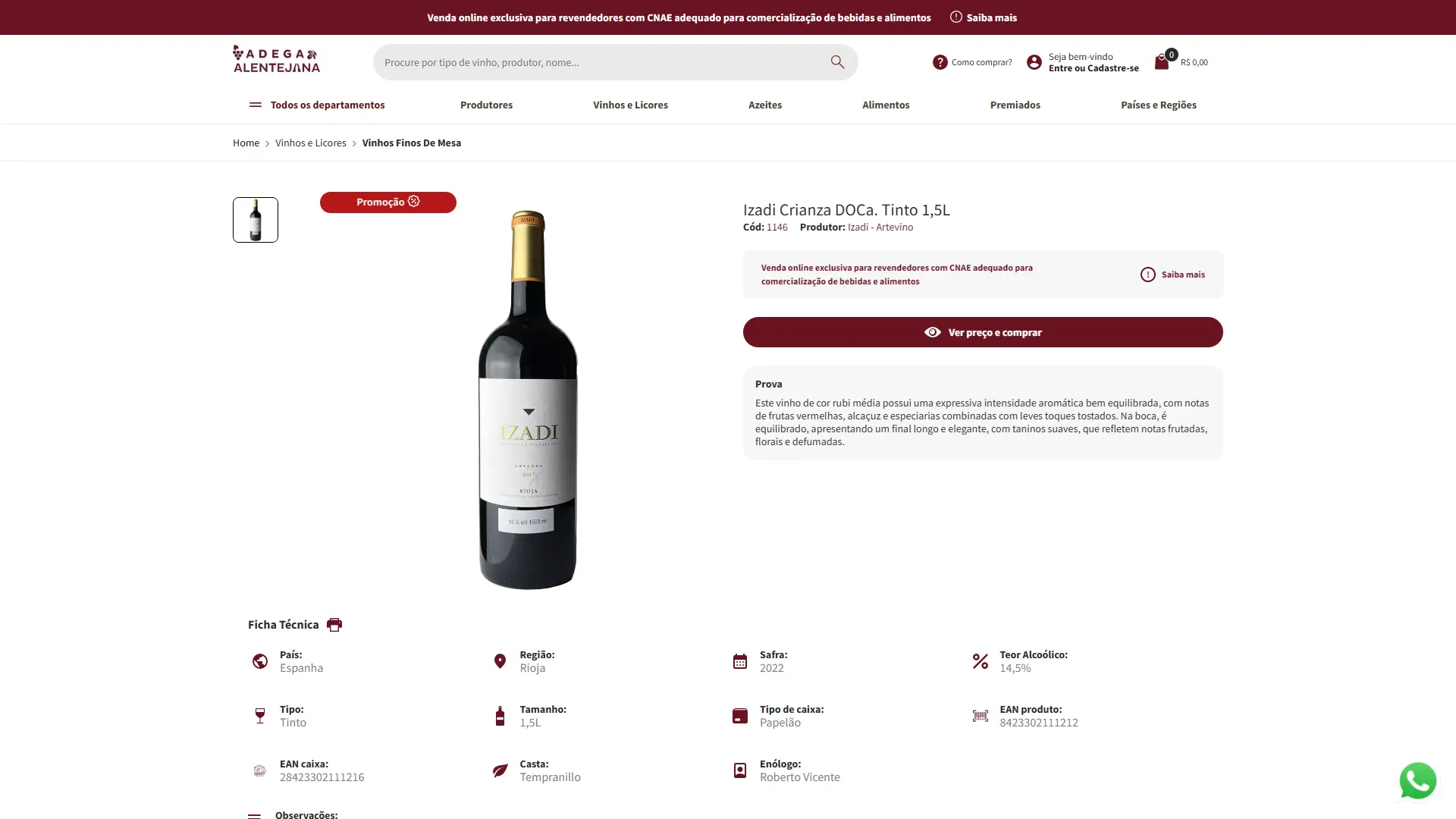
The technical sheet: a PDF that never looked good
I rebuilt the product page almost entirely — the earlier version was just the product and photos, pretty bare. The hardest part was the technical sheet: every wine has a different set of data (country, region, vintage, alcohol content, grape variety, winemaker, awards), so I had to loop through it, match the right keys, translate, and assemble everything dynamically — using AJAX to fetch the data and building the elements on screen with jQuery. The "Download Technical Sheet" button generates a PDF on the spot — that alone took me a couple of all-nighters. I remember getting released early one Friday because of some match (I think it was Copa do Brasil, not entirely sure), and brought my laptop along to keep working while watching. And to this day, that PDF is still dry and plain — nobody ever touched it again.
About
The company's full history, signed by the partners themselves — Rosely, Manuel, Pedro, and André.